

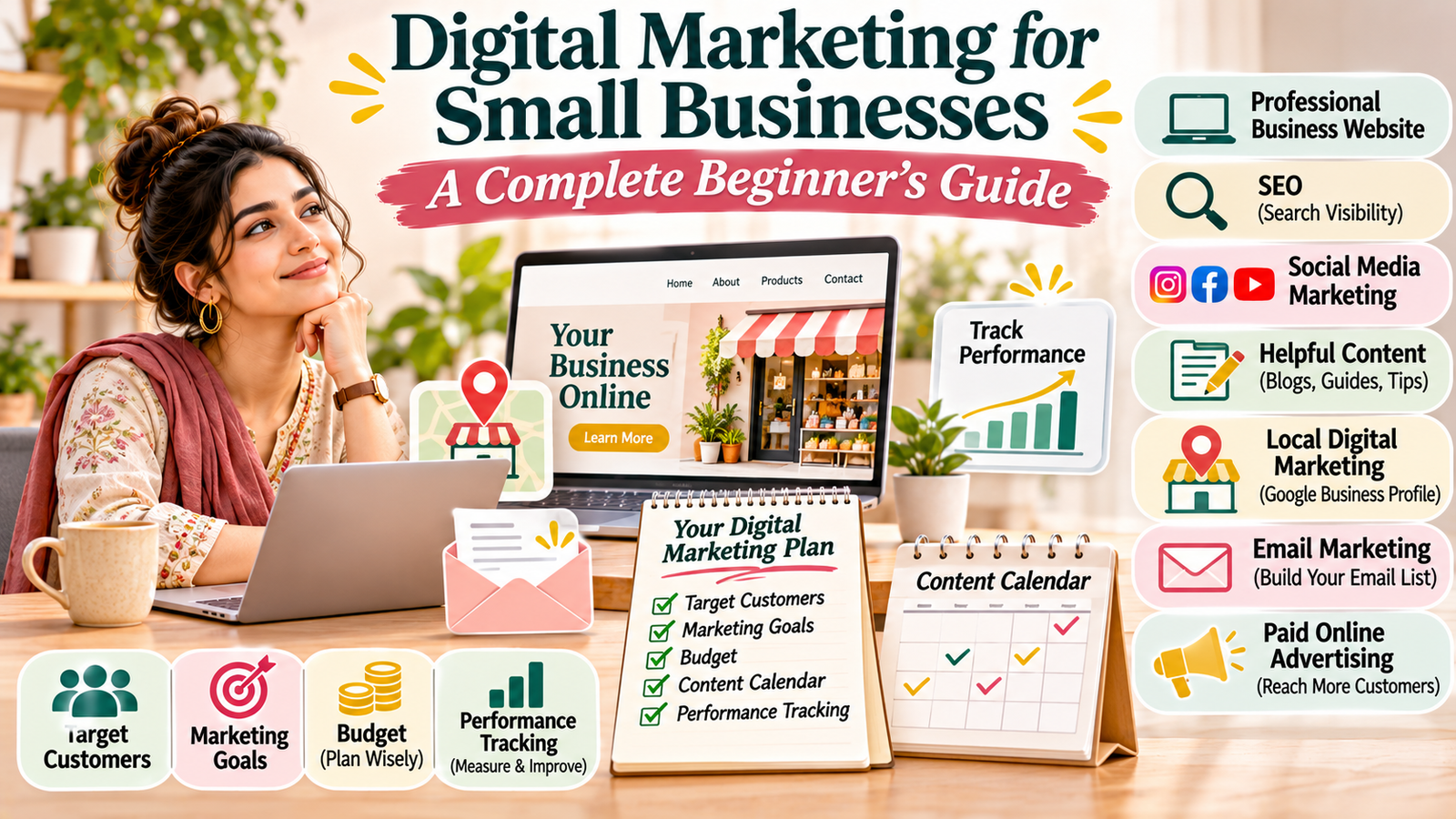
Running a small business is not easy. You need to manage customers, products, services, payments, and daily operations. At the same time, you must find ways to reach new customers and grow your business.
Today, many customers search online before choosing a product or service. They visit websites, check social media pages, read reviews, and compare different businesses.
This is why digital marketing for small businesses has become important. It helps business owners connect with potential customers through online platforms.
The good news is that you do not need a large budget or a big marketing team to get started. With the right strategy, even a small business can build an online presence and attract customers.
In this beginner-friendly guide, you will learn what digital marketing means, why it matters, which channels you can use, and how to create a simple marketing strategy for your business.
What Is Digital Marketing for Small Businesses?
These channels help businesses communicate with people who use the internet.
For example, a local clothing store can use Instagram to share new collections. A restaurant can create a Google Business Profile so nearby customers can discover it. Similarly, a service provider can use a website to explain services and receive enquiries.
Digital marketing includes several activities:
- Search engine optimization (SEO).
- Social media marketing.
- Content marketing.
- Email marketing.
- Online advertising.
- Local search marketing.
- Website marketing.
Each channel serves a different purpose. Therefore, small businesses should select the channels that match their goals and customers.
Why Is Digital Marketing Important for Small Businesses?
Here are some important benefits.
1. Helps You Reach More Customers
Traditional marketing often focuses on a particular location or audience. However, online platforms can help businesses reach people in different areas.
For example, a local bakery can attract nearby customers through local search. An online store can reach buyers across different cities.
2. Builds Brand Awareness
Customers need to recognise your business before they consider buying from you.
Social media posts, website content, videos, and online listings can help people become familiar with your brand.
Over time, consistent communication can make your business easier to recognise.
3. Supports Customer Relationships
Digital marketing gives customers different ways to communicate with your business.
They can send messages, ask questions, read updates, and share feedback.
As a result, you can understand customer needs and improve your services.
4. Helps You Understand Marketing Performance
Many digital platforms provide performance data.
For example, you can review website visits, social media engagement, advertising clicks, and customer enquiries.
These insights help you understand which activities are useful and where you may need to improve.
5. Offers Flexible Budget Options
Small businesses do not always need expensive marketing campaigns.
You can begin with a basic website, useful social media content, and local search optimisation.
Later, you can consider paid advertising when your business goals and budget allow it.
7 Digital Marketing Strategies for Small Businesses
You do not need to use every digital marketing channel at once. Start with a few useful strategies and improve them over time.
1. Create a Professional Business Website
Your website can act as the online home of your business.
It gives potential customers a place to learn about your products, services, business information, and contact details.
A useful business website should include:
- A clear homepage.
- An About Us page.
- Products or services information.
- Contact details.
- Customer enquiry options.
- Mobile-friendly design.
- Clear navigation.
Also, make sure your website loads properly and provides useful information.
A professional website can support your other marketing activities because you can direct visitors to it from social media, email campaigns, and online advertisements.
2. Improve Your Website’s SEO
Search engine optimization helps your website appear in relevant search results.
For example, a local photography business may want to appear when people search for photographers in its service area.
Start with these basic SEO activities:
- Research relevant keywords.
- Write useful website content.
- Create descriptive page titles.
- Use clear headings.
- Optimise image alt text.
- Add internal links.
- Improve website speed.
- Make your website mobile-friendly.
SEO takes time. However, consistent improvements can help search engines understand your website and its content.
3. Use Social Media Marketing
Social media platforms help businesses communicate with their audiences and share regular updates.
Choose platforms based on your customers and the type of content you can create.
For example:
- Instagram can help visual businesses showcase products.
- Facebook can support local community engagement.
- LinkedIn can help B2B companies connect with professionals.
- YouTube can help businesses publish tutorials and demonstrations.
You do not need to post everywhere. Instead, select one or two suitable platforms and maintain a consistent schedule.
Share useful information, product updates, customer stories, and educational content.
4. Create Helpful Content
Content marketing involves creating useful information that helps your audience understand a topic, solve a problem, or make a decision.
Small businesses can create:
- Blog articles.
- How-to guides.
- Product demonstrations.
- Short videos.
- Infographics.
- Customer guides.
- Frequently asked questions.
For example, a skincare business can publish an article about basic skincare routines. A furniture store can share tips for choosing furniture for small rooms.
Helpful content can build trust and support your SEO strategy.
5. Use Local Digital Marketing
Local marketing is especially useful for businesses that serve customers in a particular area.
Create and maintain a Google Business Profile with accurate business information.
Add details such as:
- Business name.
- Address.
- Phone number.
- Website.
- Opening hours.
- Business category.
- Photos.
- Products or services.
Keep your information updated. Also, encourage genuine customer reviews and respond to feedback professionally.
Local SEO can help nearby customers discover your business when they search for relevant products or services.
6. Build an Email List
Email marketing helps businesses communicate with people who have chosen to receive their updates.
You can use email to share:
- New product announcements.
- Business updates.
- Helpful tips.
- New blog posts.
- Event information.
- Special announcements.
Start by collecting email addresses with permission. Then send useful messages at a reasonable frequency.
Avoid sending too many promotional emails. Give subscribers a clear option to unsubscribe.
7. Try Paid Online Advertising
Paid advertising can help businesses reach specific audiences through online platforms.
Common options include:
- Google Ads.
- Facebook Ads.
- Instagram Ads.
- YouTube Ads.
- LinkedIn Ads.
For example, a local service business may run a search campaign to reach people looking for its services.
However, advertising requires planning. Set a budget, choose a clear goal, and monitor campaign performance.
Start with a manageable budget. Do not increase spending until you understand the results.
How to Create a Digital Marketing Plan for Your Small Business
A marketing plan helps you organise your activities and use your time and budget wisely.
Follow these steps.
Step 1: Set Your Business Goals
First, decide what you want to achieve.
Your goals may include:
- Increasing brand awareness.
- Getting more website visitors.
- Generating customer enquiries.
- Growing social media followers.
- Increasing online sales.
- Reaching customers in a new location.
Choose goals that support your business needs.
Step 2: Identify Your Target Customers
Understand who is most likely to buy your products or services.
Consider their age, location, interests, needs, and buying habits.
For example, a business selling office supplies may target students, professionals, and small offices.
Knowing your audience helps you select suitable marketing channels.
Step 3: Choose Your Marketing Channels
Select channels that your business can manage consistently.
A small local business might begin with a website, Google Business Profile, and Instagram page.
An online business may focus more on SEO, content marketing, email, and online advertising.
Your choices should depend on your customers, budget, and available resources.
Step 4: Create a Content Calendar
Plan what you will publish and when.
A simple content calendar can include:
| Day | Content Idea | Platform |
|---|---|---|
| Monday | Product introduction | |
| Wednesday | Helpful customer tip | |
| Friday | Customer question or guide | Website |
| Saturday | Behind-the-scenes update |
This is only an example. Adjust the schedule to suit your business.
Step 5: Set a Marketing Budget
Decide how much you can spend each month.
Your budget may cover website hosting, design, content creation, advertising, and marketing tools.
Keep track of your spending. Review the results before increasing your budget.
Step 6: Track and Improve Your Results
Review your marketing performance regularly.
Look at website visits, enquiries, social media engagement, email activity, and sales.
Use the information to identify what works well and what needs improvement.
Common Digital Marketing Mistakes Small Businesses Should Avoid
Digital marketing can become difficult when businesses work without a clear plan.
Avoid these common mistakes:
Trying Every Platform at Once
Managing too many channels can reduce content quality and consistency. Start with the platforms that suit your audience.
Ignoring Website Quality
A slow or confusing website can make visitors leave. Keep your website simple, useful, and mobile-friendly.
Posting Without a Strategy
Random posts may not support your business goals. Plan content around customer needs and business priorities.
Expecting Immediate Results
SEO, content marketing, and brand building take time. Give your activities enough time to produce useful information.
Not Tracking Performance
Without reviewing results, you may continue spending time or money on activities that do not support your goals.
Ignoring Customer Feedback
Customer questions and reviews can show you where your business needs improvement. Respond politely and use feedback to improve your service.
How Much Should a Small Business Spend on Digital Marketing?
There is no single budget that works for every small business.
Your spending depends on your industry, goals, competition, location, and available resources.
A business starting with a limited budget can focus on basic activities first:
- Build a simple website.
- Create useful social media content.
- Set up a Google Business Profile.
- Improve important website pages.
- Collect customer feedback.
- Track website and social media performance.
As your business grows, you can invest in professional content, marketing tools, and paid campaigns.
The important thing is to understand what you are spending and what results you are getting.
Digital marketing can help small businesses build an online presence, reach potential customers, and develop stronger customer relationships.
However, success does not depend on using every marketing channel. It depends on choosing the right activities and following a consistent plan.
Start with a professional website, improve your local presence, and share useful content on suitable social media platforms.
Next, learn about SEO, email marketing, and paid advertising as your business grows.
Most importantly, understand your customers and review your results regularly.
With patience and practical planning, digital marketing can become an important part of your small business growth strategy.
Add a Comment