

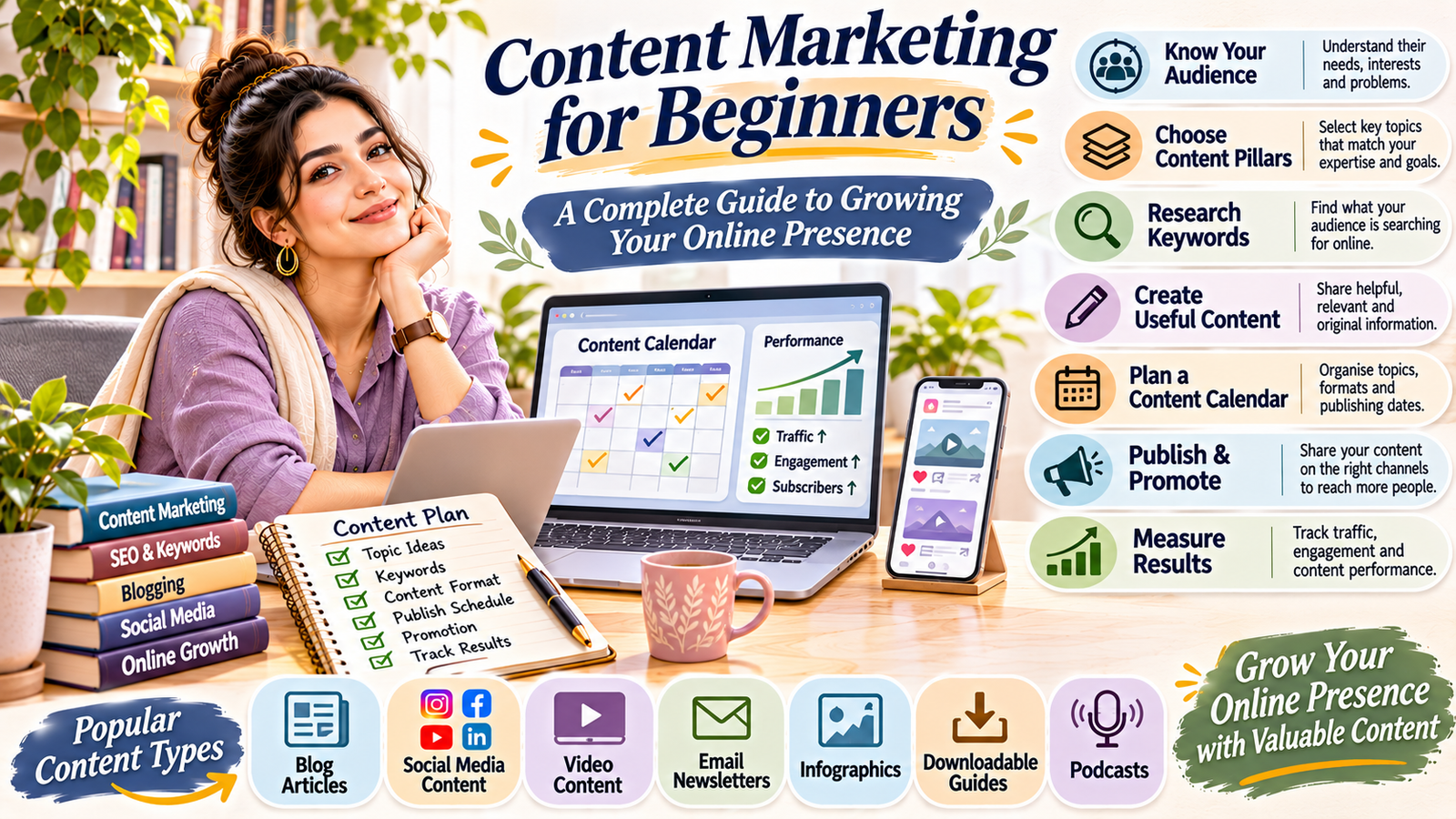
Content marketing for beginners is one of the best ways to attract an audience, build trust, and grow your online presence. Whether you are a blogger, freelancer, student, content creator, or small business owner, useful content can help people discover your work and understand what you offer.
Today, people search online for answers, ideas, products, and services. They read blog posts, watch videos, explore social media pages, and subscribe to newsletters. This creates an opportunity for individuals and businesses to connect with their audience through valuable information.
However, successful content marketing is not just about publishing posts every day. You need to understand your audience, choose the right content formats, plan your topics, and measure your results.
If you are new to this field, do not worry. This guide explains content marketing for beginners in simple steps and shows you how to create a practical strategy for long-term growth.
What Is Content Marketing?
Content marketing is a digital marketing approach that involves creating and sharing useful, relevant, and consistent content to attract and engage a specific audience.
Instead of directly asking people to buy something, you provide information that helps them understand a topic, solve a problem, or make a decision.
For example:
- A blogger publishes articles about writing and blogging.
- A digital marketer shares SEO tips and tutorials.
- A fitness business creates educational videos about exercise.
- A small business publishes guides about its products.
- A freelancer shares project examples and professional advice.
Each example uses content to connect with people and build trust.
Content marketing can include blog articles, social media posts, videos, podcasts, newsletters, infographics, and downloadable guides.
The main purpose is to provide value while gradually building a relationship with your audience.
Why Is Content Marketing Important?
1. Builds Trust and Credibility
People are more likely to trust a brand that regularly shares helpful information.
For example, if you publish practical blogging tips, readers may begin to recognise your website as a useful learning resource.
Over time, valuable content can strengthen your reputation.
2. Improves Website Visibility
Publishing useful articles can help search engines understand the topics covered by your website.
When your content matches what people are searching for, it may appear in relevant search results.
However, search rankings are not guaranteed. Content quality, relevance, competition, and website performance also matter.
3. Attracts the Right Audience
Content allows you to reach people who are already interested in your subject.
For example, a guide about starting a blog can attract beginners who want to create their own websites.
This makes it easier to connect with an audience that has a genuine interest in your work.
4. Supports Business Growth
Businesses can use content to explain their services, answer customer questions, and demonstrate product value.
Helpful articles, videos, and case studies can support customers as they research different options.
5. Creates Long-Term Value
A useful blog post can continue attracting visitors after its publication.
Similarly, an educational video or downloadable guide may remain useful for a long time.
This makes content a valuable part of a long-term digital marketing plan.
7 Popular Types of Content Marketing
There is no single content format that works for everyone. Choose formats that match your skills, audience, and marketing goals.
1. Blog Articles
Blogging is one of the most common forms of content marketing.
You can publish tutorials, beginner guides, product explanations, industry insights, and problem-solving articles.
For example, a digital marketing website can publish topics such as:
- SEO tips for beginners.
- How to write a blog post.
- Social media marketing strategies.
- Blogging tools for new writers.
Blog articles can also support your website’s SEO strategy.
2. Social Media Content
Social media helps you share information and communicate directly with your audience.
You can create:
- Educational posts.
- Informative carousels.
- Short videos.
- Industry updates.
- Behind-the-scenes content.
- Questions and polls.
Choose platforms based on your audience. For example, LinkedIn can support professional content, while Instagram can be useful for visual storytelling.
3. Video Content
Videos can explain topics in a visual and engaging way.
You can create tutorials, demonstrations, product explanations, interviews, or short educational videos.
For beginners, a smartphone and a simple recording setup may be enough to get started.
Focus on clear information rather than expensive equipment.
4. Email Newsletters
Email newsletters allow you to share information directly with subscribers.
You can send new blog articles, useful tips, business updates, resources, and announcements.
Unlike social media followers, an email list gives you a direct communication channel with people who have chosen to receive your messages.
Always get permission before sending marketing emails.
5. Infographics
Infographics present information through images, short text, charts, and visual explanations.
They are useful when you want to explain processes, comparisons, statistics, or step-by-step information.
For example, you can create an infographic showing the basic steps of keyword research.
6. E-books and Downloadable Guides
E-books, checklists, templates, and worksheets provide detailed information in a downloadable format.
You can use them to help your audience learn a topic in more depth.
For example, a blogger could create a free beginner’s checklist for starting a website.
7. Podcasts
Podcasts allow you to share information through audio.
You can discuss industry topics, interview professionals, answer questions, or share personal experiences.
Podcasts may be useful if your audience enjoys listening while travelling, working, or completing other activities.
How to Create a Content Marketing Strategy Step by Step
Creating content without a plan can waste time and make your marketing activities inconsistent.
A simple content marketing strategy helps you decide what to publish, who you want to reach, and how to measure success.
Step 1: Set Clear Content Marketing Goals
Start by deciding what you want your content to achieve.
Your goals may include:
- Increasing website traffic.
- Improving brand awareness.
- Growing social media engagement.
- Generating business enquiries.
- Building an email subscriber list.
- Attracting freelance clients.
- Educating your audience.
Choose one or two main goals when you begin.
For example, a new blog may focus on increasing relevant website traffic and building an email subscriber list.
Clear goals make it easier to select the right content and track progress.
Step 2: Understand Your Target Audience
Your target audience is the group of people you want to reach through your content.
Learn about their interests, needs, challenges, and questions.
For example, a website about blogging and digital marketing may target:
- Beginner bloggers.
- Students.
- Freelancers.
- Content writers.
- Small business owners.
- Digital creators.
Think about the questions these people ask online.
You can discover content ideas by reviewing search suggestions, relevant online communities, comments, and customer questions.
When you understand your audience, you can create content that solves real problems.
Step 3: Choose Your Main Content Topics
Select a few main topics that match your website or brand.
These topics are often called content pillars.
For example, a digital marketing website may focus on:
- Content Writing and Blogging.
- SEO and Website Growth.
- Digital Marketing and Social Media.
- Online Income and Freelancing.
Each pillar can contain several related articles.
This structure helps you organise your website and create useful internal links between related posts.
Step 4: Research Keywords and Content Ideas
Keyword research helps you understand what people search for online.
Start with broad topics and explore specific questions related to them.
For example, under content marketing, people may search for:
- Content marketing for beginners.
- How to create a content marketing strategy.
- Content marketing ideas for small businesses.
- How to measure content marketing results.
- Best content formats for beginners.
You can use tools such as:
- Google Trends to explore search interest.
- Google Keyword Planner to research keyword ideas.
- Google Search Console to review searches that already bring visitors to your website.
Choose topics based on audience needs, search intent, and your ability to provide useful information.
Step 5: Select the Right Content Formats
Different topics work better with different formats.
For example:
| Content Topic | Suitable Format |
|---|---|
| Beginner SEO tips | Blog article or carousel |
| Product demonstration | Video |
| Industry updates | Social media post |
| Step-by-step tutorial | Blog or video |
| Quick comparison | Infographic |
| Weekly tips | Email newsletter |
You do not need to create every type of content.
Start with one main format, such as blog articles, and repurpose selected information into social media posts or short videos.
Step 6: Create a Content Calendar
A content calendar helps you plan your publishing schedule.
It also prevents last-minute confusion and makes it easier to maintain consistency.
Your calendar can include:
- Content title.
- Target keyword.
- Content format.
- Publishing date.
- Main platform.
- Content status.
- Assigned tasks.
For example:
| Day | Content Activity |
|---|---|
| Monday | Publish a blog article |
| Tuesday | Share an educational social media post |
| Wednesday | Research new content ideas |
| Thursday | Share a useful tip or infographic |
| Friday | Review content performance |
Adjust this schedule according to your time and resources.
A realistic schedule is better than a plan that becomes difficult to maintain.
Step 7: Publish and Promote Your Content
Publishing an article is only one part of content marketing.
You also need to help people discover it.
You can promote your content through:
- Social media profiles.
- Email newsletters.
- Relevant online communities.
- Professional networks.
- Internal links from related articles.
- Your website’s homepage or resource pages.
Avoid sharing irrelevant promotional messages in communities. Always follow platform rules and provide value.
Step 8: Measure and Improve Your Results
Review your content performance to understand what works.
Useful measurements depend on your goals.
For example, if an article receives search impressions but very few clicks, you may need to improve its title or description. If a social media topic receives meaningful engagement, you can explore related content ideas.
How to Create Content That Your Audience Wants to Read
Good content starts with understanding your reader.
Follow these practical tips:
Solve a Real Problem
Choose topics that answer genuine questions. Do not publish articles simply to fill your website.
Use Simple Language
Write in a way that your audience can understand. Explain technical terms when necessary.
Make Content Easy to Read
Use descriptive headings, short paragraphs, lists, and relevant examples.
Provide Useful Information
Give readers practical steps, clear explanations, and relevant resources.
Keep Information Updated
Review older articles and update information when tools, platforms, or recommendations change.
Add a Clear Next Step
At the end of your content, guide readers towards a relevant action. They may explore another article, subscribe to your newsletter, or contact your business.
Common Content Marketing Mistakes Beginners Should Avoid
Even a simple content strategy can become ineffective if you make common mistakes.
1. Publishing Without a Clear Goal
Random content makes it difficult to measure progress. Decide what each piece of content should achieve.
2. Ignoring Audience Needs
Do not focus only on topics you want to discuss. Consider what your readers actually need to learn.
3. Trying to Use Every Platform
Managing too many channels can reduce content quality and consistency. Start with the platforms that matter most to your audience.
4. Focusing Only on Promotion
If every post promotes a product or service, people may lose interest. Balance promotional content with helpful information.
5. Ignoring SEO
If you publish blog articles, use relevant keywords, descriptive headings, useful internal links, and clear page titles.
6. Not Reviewing Performance
Without reviewing results, you may continue creating content that does not support your goals. Check your progress and make changes when needed.
A Simple 30-Day Content Marketing Plan for Beginners
If you are starting from zero, use this beginner-friendly plan.
| Timeline | Activities |
|---|---|
| Week 1 | Set goals, identify your audience, and select your main content topics. |
| Week 2 | Research keywords, prepare content ideas, and create a content calendar. |
| Week 3 | Publish useful content and share it on relevant platforms. |
| Week 4 | Review performance, identify successful topics, and plan improvements. |
You do not need to publish every day. Focus on creating useful content that you can maintain consistently.
Content marketing for beginners does not need to be complicated. Start by understanding your audience, choosing clear goals, and creating content that solves real problems.
Start small, keep learning, and improve your strategy with every piece of content you publish.
Add a Comment