

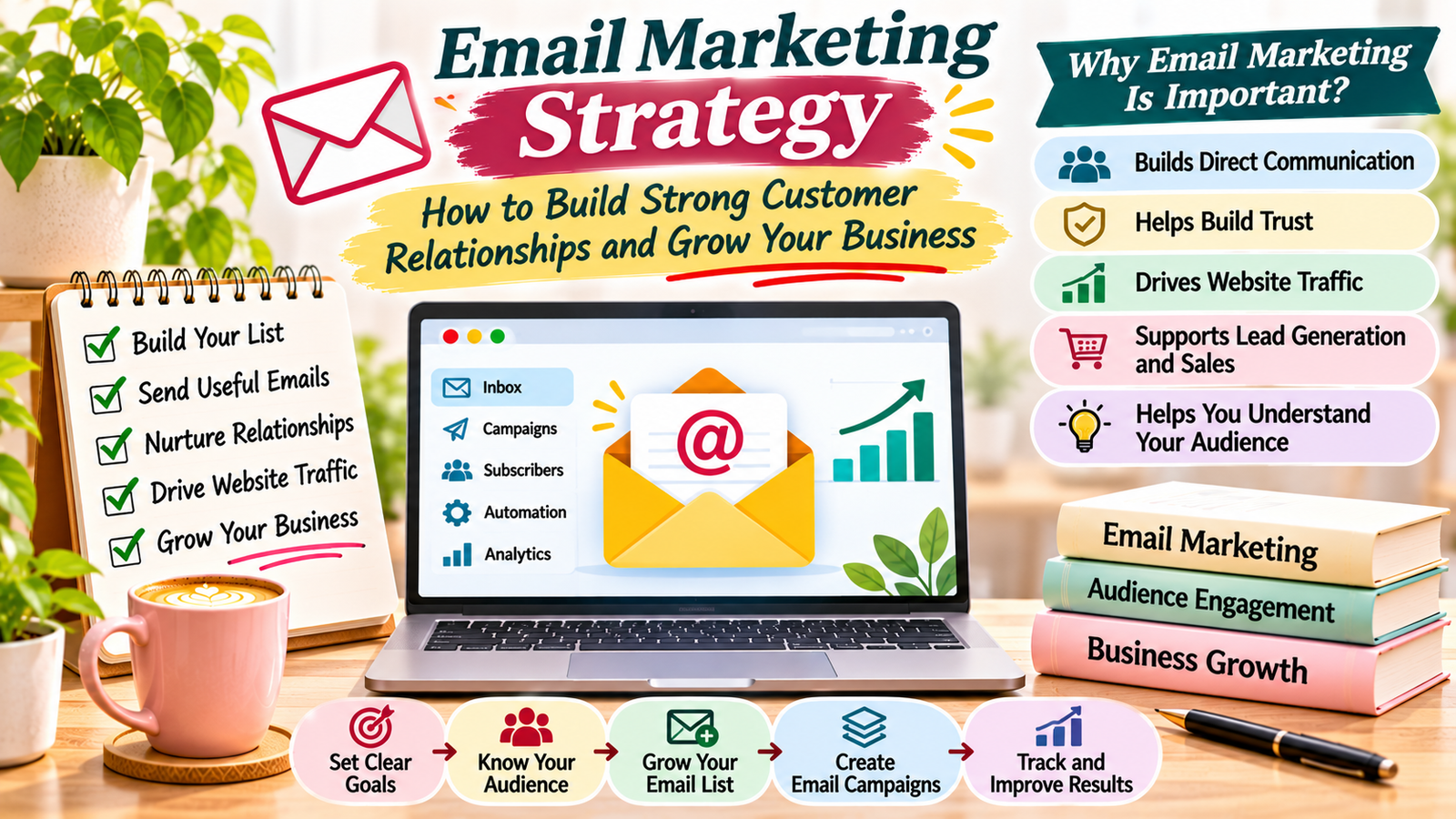
An email list can become one of the most useful assets for your website or business. It gives you a direct way to communicate with people who are interested in your content, products, or services.
However, sending random emails is not enough. You need an email marketing strategy that helps you share useful information, build trust, and encourage subscribers to take action.
Whether you are a blogger, freelancer, content creator, or small business owner, email marketing can help you stay connected with your audience.
The good news is that you do not need a large budget or advanced technical skills to get started. With clear goals, helpful content, and a simple plan, you can build an effective email marketing system.
In this guide, you will learn how to create an email marketing strategy and use it to support your online growth.
What Is an Email Marketing Strategy?
An email marketing strategy is a planned approach to sending emails to an audience to achieve specific marketing goals.
It helps you decide:
- Who should receive your emails.
- What type of information you should share.
- How frequently you should send messages.
- Which email campaigns you should create.
- What actions you want subscribers to take.
- How you will measure email performance.
For example, a blogging website may send weekly newsletters with new articles, blogging tips, SEO guides, and useful resources.
A small business may use emails to introduce products, share updates, and communicate with customers.
Instead of sending messages without a purpose, a clear strategy makes every email more useful and relevant.
Why Is Email Marketing Important?
Here are some important benefits.
1. Builds Direct Communication With Your Audience
Social media platforms and search engines can help people discover your brand. However, email gives you another way to communicate directly with subscribers.
You can share updates, educational content, and useful resources without depending entirely on social media visibility.
2. Helps Build Trust
People are more likely to engage with a brand when they regularly receive useful and relevant information.
For example, a blogging website can send practical writing tips, SEO tutorials, and content planning advice.
Over time, these helpful messages can build familiarity and trust.
3. Drives Website Traffic
You can use newsletters to bring subscribers back to your website.
For example, when you publish a new article, include a short summary and a link in your email.
Interested readers can then visit your website to explore the complete guide.
4. Supports Lead Generation and Sales
Businesses can use email campaigns to introduce services, explain product benefits, and share relevant offers.
Similarly, freelancers can send professional updates to people who have requested information about their services.
The important thing is to provide useful information rather than sending constant promotional messages.
5. Helps You Understand Your Audience
Email engagement can provide useful information about subscriber interests.
For example, if many subscribers click links about SEO, you may want to create more content around that topic.
You can use these insights to improve your future campaigns.
How to Create an Effective Email Marketing Strategy
A successful email marketing plan starts with understanding your audience and setting clear goals.
Follow these practical steps.
Step 1: Define Your Email Marketing Goals
Before sending your first campaign, decide what you want to achieve.
Your goals may include:
- Increasing website traffic.
- Growing your email subscriber list.
- Promoting new blog articles.
- Generating business enquiries.
- Building customer relationships.
- Promoting products or services.
- Encouraging repeat purchases.
Choose two or three main goals that match your business needs.
For example, a beginner-focused blog may prioritise newsletter subscriptions and website traffic.
A service-based business may focus on generating qualified enquiries.
Step 2: Understand Your Target Audience
Your emails should match the interests and needs of your subscribers.
Think about the people you want to reach.
Ask yourself:
- What topics interest them?
- What problems do they want to solve?
- What information would help them?
- How often would they like to hear from you?
- What type of content do they prefer?
For example, subscribers to a digital marketing blog may be interested in blogging tips, keyword research, SEO, social media, and online freelancing.
Understanding these interests helps you create more relevant emails.
Step 3: Build an Email Subscriber List
Your email marketing strategy needs people who have chosen to receive your messages.
You can grow your list through different methods.
Website subscription forms: Add a simple form to relevant website pages.
Free resources: Offer a useful checklist, template, or beginner guide in exchange for an email subscription.
Blog content: Invite readers to subscribe after they read a helpful article.
Social media: Share your newsletter subscription page with interested followers.
Dedicated landing pages: Create a page that explains the benefits of joining your email list.
Always use clear consent practices. Tell people what they are signing up for and provide an easy way to unsubscribe.
Never purchase random email lists or add people without appropriate permission.
Step 4: Choose an Email Marketing Platform
An email marketing platform helps you collect subscribers, create campaigns, and manage email communication.
Some popular options include:
- Mailchimp.
- Brevo.
- MailerLite.
- Kit.
Compare their features, pricing, automation options, and subscriber limits before choosing one.
As a beginner, start with a platform that offers the features you actually need.
You do not need complicated automation systems when you are building your first email list.
Step 5: Create Useful Email Content
Your subscribers should receive information that makes joining your list worthwhile.
You can share different types of content, such as:
- New blog articles.
- Practical tips and tutorials.
- Industry updates.
- Free resources.
- Product or service information.
- Case studies.
- Special announcements.
For example, a digital marketing newsletter may include one new blog post, three useful tips, and a recommended resource.
Keep your messages focused. One email does not need to cover every topic.
Step 6: Write Clear and Engaging Emails
A useful email should be easy to understand.
Follow these writing practices:
Write a clear subject line: Tell readers what the email contains.
Start with a friendly introduction: Explain why you are contacting them.
Keep the message focused: Share one main idea or a small group of related ideas.
Use short paragraphs: Make the email easy to read on mobile devices.
Add a clear call to action: Tell subscribers what to do next.
Include your business details: Make it clear who is sending the email.
Avoid misleading subject lines and excessive promotional language.
Step 7: Plan Your Email Sending Schedule
Consistency helps subscribers know what to expect.
However, sending too many emails can annoy people, while sending too few may make them forget your brand.
Choose a realistic schedule.
For example:
| Frequency | Email content |
|---|---|
| Weekly | New articles and useful tips |
| Twice a month | Educational guides and resources |
| Monthly | Important updates and content highlights |
| Campaign-based | Relevant product or service announcements |
Start with a schedule you can maintain.
You can adjust the frequency based on subscriber preferences and campaign results.
Step 8: Use Email Segmentation
Email segmentation means dividing subscribers into smaller groups based on relevant information or interests.
For example, a digital marketing website may create groups for:
- Blogging beginners.
- SEO learners.
- Freelancers.
- Small business owners.
- Social media marketers.
You can then send more relevant information to each group.
For example, readers interested in SEO may receive keyword research guides, while freelance writers may receive portfolio and client-finding tips.
Make sure your segmentation practices respect subscriber privacy and consent.
Step 9: Automate Important Emails
Email automation allows you to send certain messages automatically when a subscriber completes an action or meets a defined condition.
Useful beginner-friendly automations include:
Welcome email: Sent when someone joins your newsletter.
Resource delivery email: Sends a promised checklist or guide.
Onboarding sequence: Introduces your website and important resources.
Follow-up email: Shares related information after a subscriber interacts with a specific campaign.
Start with a simple welcome email. Add more workflows when you understand your audience and have a clear reason to use them.
Step 10: Measure and Improve Your Email Results
An email marketing strategy needs regular review.
Track important measurements such as:
- Number of subscribers.
- Email delivery rate.
- Click rate.
- Unsubscribe rate.
- Website visits from email campaigns.
- Leads or sales generated.
Open rates can provide some context, but privacy features may make them less reliable.
Focus on meaningful actions, such as link clicks and conversions.
Use your results to improve subject lines, email content, sending schedules, and calls to action.
Common Email Marketing Mistakes to Avoid
Even a good email campaign can become ineffective when basic practices are ignored.
1. Sending Emails Without Permission
Do not add people to your mailing list without appropriate consent.
Use clear subscription forms and explain what subscribers will receive.
2. Sending Too Many Promotional Emails
If every message tries to sell something, subscribers may lose interest.
Balance promotional messages with useful educational content.
3. Writing Confusing Subject Lines
Your subject line should clearly describe the email.
Avoid exaggerated promises or misleading wording.
4. Ignoring Mobile Users
Many people read emails on smartphones.
Use responsive email designs, readable fonts, and short paragraphs.
5. Forgetting to Include a Call to Action
If you want readers to visit an article or explore a service, provide a clear link or button.
6. Not Reviewing Campaign Results
Do not keep repeating the same email format without checking performance.
Review your reports and improve future campaigns.
Email Marketing Strategy Checklist
Use this checklist when planning your email marketing activities:
- Set clear email marketing goals.
- Understand your target audience.
- Create a permission-based subscriber list.
- Choose a suitable email marketing platform.
- Plan useful email content.
- Write clear subject lines.
- Add relevant calls to action.
- Choose a realistic sending schedule.
- Segment subscribers when useful.
- Set up a welcome email.
- Track clicks and conversions.
- Review and improve your campaigns.
A strong email marketing strategy helps you communicate with your audience, build trust, and support long-term business growth.
Start by defining your goals, understanding your subscribers, and sharing useful information consistently.
You do not need a complicated system to begin. A simple newsletter, a helpful welcome email, and a realistic publishing schedule can provide a strong foundation.
As your audience grows, you can introduce segmentation, automation, and more detailed campaign tracking.
Remember, successful email marketing is not about sending more messages. It is about sending the right information to the right people at the right time.
Add a Comment